"That Would Never Happen!" Dan and Ali write the real reviews of UK TV drama serials (stuff marketed as quality, if you please), telling it like it is rather than the my-mate's-the-director, I-get-party-invites, or the I-need-my-job reviews that often appear. Not to mention the I've-not-watched-it....
Showing posts with label Adaptation. Show all posts
Wednesday, 28 October 2015
Jekyll & Hyde
Jekyll & Hyde, ITV's new Sunday teatime drama, is lots of fun. Written by Charlie Higson, most famous for The Fast Show, but also the writer of several gruesome thrillers for grown ups (King of the Ants), and kids (the Young Bond books), it's very pointedly not an adaptation of Robert Louis Stevenson's Strange Case of Dr Jekyll and Mr Hyde, but a new spin-off, following the life of his grandson, Robert Jekyll.
It's almost like a Alan Moore graphic novel re-imagining of the story, set in the 1930s with Robert trying to find out about his past, and battling his urges to change from his normal, mild-mannered self to the demonic Hyde. It also brings to mind 'The Incredible Hulk', with the first transformation coming about when he needs to lift a truck off a small child. (Thankfully he doesn't inflate and his clothes stay on). Higson has also thrown a bit of medicine in there, with Jekyll needing to keep taking his pills to keep the attacks at bay. It's not really much of a spoiler to say that he loses the pills pretty early on.
It's very entertaining, with some great performances particularly from Tom Bateman as Jekyll, and Richard E Grant hamming it up as the baddie Sir Roger Bulstrode, head of a murky organisation investigating the paranormal in 1930s London (we said it was a bit Alan Moore). It has been criticised for being too scary for the 6.30pm slot, and maybe it is - the bit where intruders enter Jekyll's parents' house was genuinely unsettling - but we remember being terrified by Doctor Who when we were, ahem, somewhat smaller, and he is currently on show pre-watershed on BBC1.
Some bits don't work. The very brief explanation of Jekyll's ancestry: Stevenson's Hyde had an illegitimate son, who met Jekyll's adopted father in the First World War, having fathered a child himself, which he then abandoned) is a bit convoluted and doesn't explain why Jekyll is called Jekyll, but let's not think about that too much.
Labels:
1930s,
Adaptation,
Charlie Higson,
Dr Jekyll and Mr Hyde,
Drama,
fantasy,
historical,
horror,
ITV,
Natalie Gumede,
Richard E. Grant,
Robert Louis Stevenson,
teatime,
Tom Bateman,
TV,
UK
Monday, 28 September 2015
Cider With Rosie
If you liked 'Lark Rise to Candleford', then you'll love this.... Well, ok, they're at least not spinning this out to a twee Sunday evening staple, but we did wonder why this rite-of-passage memoir was part of the short 'literary classics' series rather than a Boxing Day special.
It was a solid, if episodic, adaptation of the much-loved book, with Samantha Morton holding things together nicely as Laurie's long-suffering mother. A voice-over by Timothy Spall as the older Lee gave viewers a taste of the lyrical prose which would otherwise have been lost and there was enough nostalgia for the chocolate boxers in the form of rolling hills and meadows, quaint print frocks and the sort of ramshackle country cottage that would nowadays fetch a cool million. There was also enough grit left to appease the anti-chocolate box brigade, with a child's death, a murder, a war deserter and a father who behaved like Lord Marchmain in 'Brideshead' in refusing to return to his family after WWI (with less obvious cause).
For us, though, it was probably most memorable for the astonishingly brief cameo appearances of Annette Crosbie and June Whitfield as the warring grandmothers, and the inclusion of two young actors who are the offspring of... two actors. Neither was a bad performance, but there are concerns about the accessibility of the profession to those without privilege, with the likes of David Morrissey and Christopher Eccleston raising doubts as to whether their current counterparts, starting out, would be able to make a living at it. By 'privilege' they may be referring to the likes of Eddie Redmayne and Ben Cumberbatch, products of Eton and Harrow, who could no doubt have afforded to rest indefinitely between jobs even before becoming successful. Aren't the ranks of actors, we would argue, equally homogenised by keeping it in the family?
Labels:
Adaptation,
BBC1,
Cider With Rosie,
Drama,
Laurie Lee,
review,
Samantha Morton,
TV,
UK
Saturday, 26 September 2015
Midwinter of the Spirit
A new crime series based on Phil Rickman's series of novels, with the twist that heroine Merrily Watkins (Anna Maxwell Martin) is a vicar and a trainee exorcist. Umm, that's kind of it, really, and we sat down to watch in anticipation of shivers down the spine, but the first episode didn't quite gel. The novels are set in the fictional Herefordshire town of Ledwardine and other than a few pretty shots of quaint streets, there was little sense of place. The surrounding Marches country has an attraction part way between comfy Cotswolds and wild Welsh; a perfect place, in other words, for the eye to see beauty but the mind to think of hidden forces, particularly in view of its long and often bloody history.
But no. This was mostly establishing Merrily as that most modern of Christian clerics, the laid-back, drinking, straight-talking, tolerant type. She's recently lost her husband and is doing her best for her sparky teenaged daughter, and despite being very much at the novice stage when it comes to driving out demons, is the first port of call when a man is found crucified in the woods. Oh and when another priest starts acting very strangely and can't comfort a dying man in a hospital. The dying man has freaked out the nurses, and when he gets hold of Merrily, rather literally, he almost frightens the faith out of her. There are the usual upside-down crosses, shrine rooms with pentangles and goat skulls and lots of mentions of evil, but it's all feeling rather disjointed and muddled so far. Let's hope David Threlfall as Merrily's seen-it-all exorcist coach can sort things out.
Labels:
Adaptation,
Anna Maxwell Martin,
David Threlfall,
Drama,
horror,
ITV,
Midwinter of the Spirit,
Phil Rickman,
review,
TV,
UK
Tuesday, 15 September 2015
An Inspector Calls
If you enjoy watching actors waft about in pretty costumes as characters of wealth and ease, then this will be as much your bag as 'Downton Abbey'. It parts company with the latter on its message, however. The household at Downton, as written by Julian Fellowes, is a jolly affair where the boss is paternal and ties of love and human fallibility link those upstairs with those downstairs, (who nonetheless know their place, naturally). The Birling family, by contrast, are the sort of smug, arrogant types who see their servants and employees as borderline beings, foreign to their own sensibilities and hardly worth a moment's thought, never mind decent wages.
Produced in 1945, at the fag end of the most violent conflict in recorded history, JB Priestley's play places the blame for almost half a century of unrest on a settled order that relied on enormous inequality. Set in 1912, with talk of a coming war among the European powers jockeying for empires, the successful industrialist Birlings are celebrating the engagement of their daughter to a business rival's son with a quiet at-home, i.e. an extravagant dinner. They are visited by Inspector Goole, investigating a young woman's suicide, and it becomes apparent that far from the poor woman being nothing to do with them, they have each played a part in bringing her to wretchedness. Having thoroughly shamed them, Goole then bids them good evening, but their unwillingness to face up to their culpability leads them to question what has happened. It seems there is no Inspector Goole, and no suicide, but....
About half the UK population will probably be reminded of their schooldays, since this has been a staple of English courses for some time. Familiarity may breed contempt for what is actually a clever piece of theatre, only dulled somewhat in Goole's rather expositional moralising about community. Clearly Margaret Thatcher either never saw this, or won a prize from her Edwardian-loving teachers for her essay rebutting Priestley's ideas. This television adaptation, as part of a season of BBC remakes of 20th Century classics, featured a fine cast and good acting, with Ken Stott as the blustering Arthur, Miranda Richardson as his thin-lipped snob of a wife and David Thewlis as the eponymous Inspector. A little old-fashioned in tone it may be, but with its depiction of the well-off claiming to have no responsibility for anyone outside their immediate family, it's as pertinent as ever.
Labels:
Adaptation,
Chloe Pirrie,
David Thewlis,
Drama,
Finn Cole,
JB Priestley,
Ken Stott,
Kyle Soller,
Lucy Chappell,
miranda richardson,
Sophie Rundle,
TV,
UK
Sunday, 6 September 2015
Lady Chatterley's Lover
Constance Chatterley, newly-married, looks a little apprehensive here, as though she can see into the future. The umpteenth adaptation of DH Lawrence's racy 1928 novel, which originally caused a sensation, a 1960s trial, and a comment about the material being unsuitable for one's servants, is here a 90-minute one-off. Within the first 15, Constance has met Clifford, fallen in love and married him; he's gone off to war and been seriously injured, while one of his men Mellors has survived both a mining disaster and the war and returned to find his wife pregnant by another man. It takes another 25 for Lady Chatterley to sneak off to the newly-appointed gamekeeper's shack for the sex she can no longer enjoy with her paralysed husband.
The best thing about this production is James Norton as Clifford Chatterley, cast against type as an impotent hero and sympathetically portrayed as a man bound by the expectations of his peers and upbringing. Holliday Grainger caught the voice and mannerisms of pampered Connie perfectly, but while she has 'a good face for period', and is around the right age, something about her doll-like features made her seem like a petulant child. The cleric who married her appeared to be about twelve also. Presumably the war didn't slaughter the nation's aged clerics to this degree? Richard Madden, as the earthy Oliver Mellors, bore an unfortunate passing resemblance to Peter Sutcliffe, aka the Yorkshire Ripper, which made it rather hard to understand his attraction.
Generally, the faults are those of the novel, i.e. the slow pace, the overblown melodrama and the giggly nature of the John Thomas references. It has something to say, rather heavy-handedly, about the changing nature of class in England after WWI, but in terms of personal choice, we couldn't help thinking that sex with Mellors would have to be amazing to compensate Lady C for the loss of about six sumptuous dresses and the huge dining table of Wragby Hall. It isn't as though there had been any hint of anything beyond the physical in their relationship, and until they were found out, Constance appeared content to have her beefcake and eat it. They drove off in the final scene, inexplicably in a posh Chatterley car, with an unborn Mellors waiting, but how long before the romance faded in the face of unplucked chickens, unpeeled vegetables and unwashed nappies?
Labels:
Adaptation,
BBC1,
DH Lawrence,
Drama,
Holliday Grainger,
James Norton,
Jed Mercurio,
Lady Chatterley's Lover,
Richard Madden,
TV,
UK
Thursday, 16 July 2015
The Outcast
Just in case you were tempted towards nostalgia for the era of Miss Marple - even, bless, a juicy murder or three - along comes a handsomely mounted, superbly acted drama that'll have you happy that the past is a foreign country, where things were done very differently.
Based on the novel by Sadie Jones, this is the tale of Lewis Aldridge (George MacKay), who becomes the eponymous outcast after witnessing his beloved mother's accidental drowning as a boy. We haven't read the novel and thought the scant publicity looked rather liked (whisper it) chick lit, but this was 90 minutes of sensitive storytelling, beginning when Lewis's father Gilbert (Greg Wise) returned from the war a damaged, distant near-stranger. Unable to share his grief at Elizabeth's (Hattie Morahan) tragic death, he sends his son off to boarding school and remarries. Young Alice (Jessica Brown-Findlay) tries to become a mother, to her stepson and in her own right, but she fails at both, and by the time Lewis reaches his teens he is in very deep trouble indeed.
Yes, these were the days of sunny bike rides in green pastures, solid furniture, swishy table skirts and smoke-filled jazz clubs in sexy soho, but the same era brought disgusted incomprehension towards self-harm, guilt, loneliness and grief. There's still a chance that this will turn out to be a very 21st Century take on the 1950s (we've left Lewis sentenced after burning down the local church) but so far this has been a welcome addition to the current rich pickings on British TV, alongside 'Humans', 'Odyssey' and 'The Saboteurs'.
Labels:
1950s,
Adaptation,
BBC,
Drama,
George MacKay,
Greg Wise,
Hatty Morahan,
historical,
Jessica Barden,
Jessica Brown Findlay,
Nathaniel Parker,
Sadie Jones,
TV,
UK
Thursday, 11 June 2015
Stonemouth
We're beginning to think the BBC are saving us the trouble of reading Iain Banks's books. Admittedly there's been a big gap between 'The Crow Road' in 1996 and this, his penultimate novel before his untimely death in 2013. However, there are similarities strong enough to stir memories across the intervening years. A cheeky-chappy average Scots lad, here played by Christian Cooke, returns to the small town where he grew up for the funeral of someone he loved, and suspects foul play. There's also a love interest, who is ever-so-perfect, and a more suitable and human girl lurking nearby. It's not bad, but it feels like Banks' point is that men never mature mentally beyond their teens. The less charitable opinion is that Banks himself didn't move beyond this one narrative, and maybe just wrote well enough to enchant readers regardless. On television, it's not an advert for 'Visit Scotland', on the plus side, but more of an extended 'Taggart' episode with a voice-over. Has there ever been a drama that has been improved by a narrative voice?
Labels:
Adaptation,
BBC2,
Christian Cooke,
Drama,
Gary Lewis,
Iain Banks,
Peter Mullan,
Stonemouth,
TV,
UK
Sunday, 25 May 2014
Quirke
John Banville's crime series hero could have been written for the lugubrious features of Gabriel Byrne. We're in familiar territory, but noir with a capital N and handsomely mounted. 50s Dublin and 50s Boston probably never looked this good but who cares when it's 90 minutes of pure escapism and Byrne's craggy features?
Quirke is a man of mystery and lots of alcohol. In common with his fellow crime protagonists he has no discernible first name, comes from shady origins and has suffered loss and loneliness. He has enough of the Marlowesque about him to enliven proceedings, however, and this first of three feature-length tales starts very close to home, with Quirke's complicated family. He finds his adoptive brother in his path lab late one night, forging a death certificate of a young woman, and this leads to a chain of violence and disclosure of old family secrets involving hidden identities and the brutal treatment of young, pregnant women. From these basic ingredients, Banville's story weaves a mesmerising spell. If the next two are as good as this, Quirke must be here to stay.
Labels:
Adaptation,
Andrew Davies,
BBC1,
Crime,
Drama,
Gabriel Byrne,
John Banville,
review,
TV,
UK
Friday, 22 February 2013
Jack Taylor
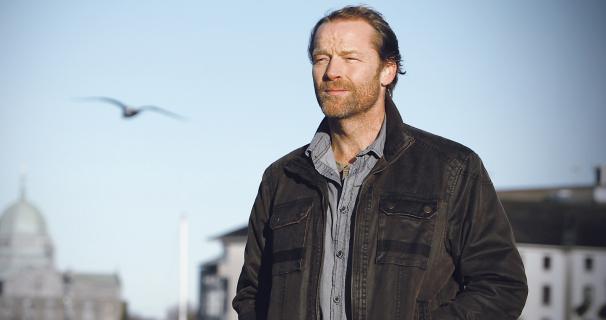
The first of three feature-length episodes, based on a series of novels about ex-Gard, now private detective, Jack Taylor (Iain Glen). Think 'Single-Handed' with a sozzled, grizzled version of Jack (they're both called Jack!) and you're close. Both are set in and around Galway and Connemara and involve a lone man seeking the truth and justice for the missing and murdered in an area haunted by a long and violent past. The present's not that great either, post-economic crisis.
That's it, really. It's nothing you haven't seen before, and aside from some quips the script is unremarkable either way. Casting, however, is crucial. Iain Glen is so watchable as Jack, a character who seems simultaneously at ease with yet wholly estranged from himself, that your ears will willingly block out the moments when his Irish accent goes south, or rather south-east.
Labels:
Adaptation,
Crime,
Drama,
Iain Glen,
Irish,
Ralph Brown,
TV
Tuesday, 14 August 2012
Thirteen Steps Down
We'd like to say TWNH - that a disturbed young man would never become obsessed by JR Christie to the point where he believes himself haunted and kills a (rather rude) woman which bodes ill for the other object of his obsession, a young model. We can't of-course pin a TWNH here, however absurd-sounding. What's less likely is that a young man would have a Cliff Richard record waiting on his stereo, but madness provides any and every excuse on TV.
Ruth Rendell, queen of the 90s murder-mystery and psychodrama, has here penned another nasty and sordid tale of people on the margins who need help but get sex and murder instead. The problem with adapting her novels into 100-minute teleplays is that she treads a fine line between a familiar world and a fantasy one, even before dead serial killers put in an appearance. Her anti-hero is called Mix Cellini (Luke Treadaway) and he has a job fixing gym machines that allows him complete autonomy and sex with bored housewives. He lives in a big, creepy old house with a waspish landlady (Geraldine James) who happens to have had a close brush with Christie in her youth. Then there's his crush on a supermodel who happens to live nearby, and a girl who sleeps with him on a first date after he's spoken admiringly of a man who killed and then raped a series of women. Not impossible, then, but unlikely taken altogether, and far more convincing with the time and care of good prose - a slow immersion in a fictional world rather than a hasty onscreen dunking.
So, will Mix kill Nerissa (Elarica Gallacher) before his landlady and her formidable friends (Gemma Jones and Anna Calder-Marshall) find out what he's up to? It's watchable, but not one of Rendell's best.
Labels:
Adaptation,
Anna Calder-Marshall,
Crime,
Gemma Jones,
Geraldine James,
Luke Treadaway,
Ruth Rendell,
Thirteen Steps Down,
tv drama,
UK
Sunday, 22 January 2012
Birdsong
We have to begin by saying that it isn't Dan's kind of thing and Ali wasn't mad about the novel, nor does Mr. Redmayne look like an obvious choice for Stephen Wraysford.
The first half was a beautifully shot 90 minutes, and effectively contrasted the hell of the trenches with the more exquisite hell of a clandestine love affair before the war. It didn't do it in an original way, however, and the whole thing was soooo slooooow. The two narrative hooks of what happened to the romance and does Wraysford survive the trenches are barely enough to keep a tired viewer awake. There are lots of lingering, longing looks between the two leads and enough softly mournful piano music to signpost tragedy more clearly than the blasted intestines of a dying soldier. The central love story doesn't come to life, however, either through singular characters or dialogue.
Visually handsome and fans of Faulks's novel will probably love it. Anyone who loves a weepie with a bit of war thrown in, and not the other way around, will probably love it too, and if it prompts them to pick up the book, well... it's a better read than your average Mills&Boon. It's just that for the rest of us it's a bit dull.
Labels:
Abi Morgan,
Adaptation,
Clemence Poesy,
Drama,
Eddie Redmayne,
Joseph Mawle,
Matthew Goode,
review,
Sebastian Faulks,
Thomas Turgoose,
TV,
UK
Wednesday, 11 January 2012
Edwin Drood
Dickens’s famously unfinished last novel gets the BBC treatment. For those seeking comfort, his stocks-in-trade are mostly to be found: aptly-named characters, Cockney urchins and grubby old drunks, and coincidental love-interests. Where ‘Drood’ differs from the rest is in its lack of a sympathetic central character. The main trio of Edwin (Freddie Fox), Rosa (Tamzin Merchant) and Edwin’s Uncle John Jasper (Matthew Rhys) are all in need of a good shake, though at least Rosa comes to her senses towards the end of the first episode of two.
This made the unfolding drama less gripping than it might have been, and we can’t help but speculate as to whether Dickens would have revised and re-written swathes of it, as he often did after first serialisation. Or maybe, in his declining years, he decided to shade his characters a little differently. There is a lovely atmosphere of darkness, perfect for a winter evening, and as usual it all looks sumptuous but we’re not sure about the casting. Fox is boy-band pretty with a voice to match, and does it really add anything to have the Landless twins as mixed race? We’re not talking about colour-blind casting – their ‘foreign’ nature is a key narrative feature – but Dickens wasn’t explicit about whether they were Colonial British and seen as inferior for that reason, which was a very real prejudice of his times. OK, it’s quibbling, and the hour rollicked along with everything pointing towards the perfect solution of Neville Landless (Sacha Dhawan) marrying Rosa, his sister Helena (Amber Rose Revah) marrying Rev. Crisparkle (Rory Kinnear), Edwin growing up a bit and Jasper suffering eternally for his impure thoughts. Castration might be a safer solution for Rosa, but we doubt Dickens would ever have made that particular revision....
Being a 19th Century novel, however, ‘downhill’ doesn’t mean an easy ride, and we were left with a scene of Jasper apparently carrying out his laudanum-induced desires of murdering Edwin, believing him to be a rival for Rosa. So, is Edwin really dead at Jasper’s hands? Will Neville be blamed? Has it left Rosa vulnerable to the unwelcome attentions of her music master? Dickens wrote more, with his usual large cast of characters, and even hinted at an ending, but it’s been left to screenwriter Gwyneth Hughes to script her own conclusion. It may be hard to please Dickens purists, but at least anything she comes up with won’t be any more outlandish than anything written by the great man himself.
Labels:
Adaptation,
Alun Armstrong,
Charles Dickens,
Drama,
Edwin Drood,
Freddy Fox,
Julia McKenzie,
Matthew Rhys,
Mystery,
review,
Ron Cook,
Rory Kinnear,
Tamzin Merchant,
TV,
UK
Saturday, 17 September 2011
DCI Banks
Could Stephen Tompkinson look any more lugubrious? We fell asleep. Woke up to a scene in a morgue: Banks, a charred body and a man brought in to identify it. Yes, he says, it's his daughter, but he then notices a wound in her head, explains he's a GP and launches into a forensic pathologist's explanation of how she died. Unsurprisingly, it involved heat. Rather more surprisingly, she still had a fairly decent head of hair. We fell asleep again....
Labels:
Adaptation,
Crime,
DCI Banks,
Drama,
John Bowe,
review,
Stephen Tompkinson,
TV,
UK
Thursday, 8 September 2011
Inspector George Gently
AKA Gently Round the Bend. Never was viewer in search of guilty pleasure so confused. Martin Shaw? Check. Lee Ingleby? Check. Geordie accents? Check. Beehives, mini-skirts and kohl-rimmed eyes? Check check check! Just as we thought it was safe, up pops craggy-faced Sean Gilder to the unmistakeable strains of quavery-voiced angst used similarly in 'The Shadow Line'. Then, as if one puzzle isn't enough, there's a 60s anthem, followed by another, and then another at regular intervals, providing aural backdrop to the neat 60s cars. Ah, so this is 'Heartbeat'! Or...
By the end of the 90-minute episode, we'd worked it out: 'Gently' has turned into a prime example of television's plat du jour. Here's our version of the recipe:
- Cops! Between two and four, usually two; one older, one younger (other examples:- Lewis; Scott & Bailey)
- Kitsch historical setting. N.B. anachronisms no object. 'Gently' served up a Geordie housewife at an evening yoga class in 1966. Hmm. (Heartbeat, The Royal, Born and Bred, The Hour, Downton Abbey etc. etc.)
- Kitsch geographical setting. (Heartbeat, Ballykissangel, Doc Martin...)
- 'Quavering-voiced angst' soundtrack (The Shadow Line, Wallander)
- Cliche! A plot involving deviant sexuality of some kind (too many examples to mention)
- TWNHs! They knew the facial cuts were fresh despite the face having been eaten away? The teenager was such a natural in the TV audience that she was made host of the show? The friend named the wrong colour of dress worn by the above teenager, thereby proving she hadn't turned up "til much later"... but when she had turned up, presumably she'd have been wearing something??
Labels:
1960s,
Adaptation,
Crime,
Drama,
Inspector George Gently,
Lee Ingleby,
Martin Shaw,
TV,
UK
Wednesday, 7 September 2011
The Field of Blood *spoilers*
Monday's conclusion, unsurprisingly, didn't quite live up to last week's opener. Like comic book heroines before her, Paddy only had one hour to save the world... well, solve the crime. She did so admirably, but we're not sure the end justified the means. Most of the hour was spent with her running around annoying her seniors (cliche #1), being told she was unattractive (TWNH), being told she was beautiful by colleague who wanted to sleep with her (cliche #2), putting herself in dangerous situations without telling anyone (cliche #3) and having her out-of-line a*se saved by colleague who was terminally ill (cliche #4).
With all of the above happening, it wasn't easy to work out what had happened and why. Paddy's young cousin Calum had apparently killed little Brian because he was forced to by a disturbed lad (Danny?) who had previously killed his own half-brother... I think. The scene in the prison, where Calum tells Paddy and his father what happened, hits all the right notes but nonetheless leaves us wondering if a child would commit such an abhorrent act - there is no suggestion that he was willing to comply - on the threatening say-so of a teenager, and then fail to crumple under pressure from his family, police, social workers etc. to tell all. Paddy accuses the 'real' killer of trying to make Calum just like him, which seems a slim motive, unless we're once again at tellyland's catch-all motive of 'they did it because they're mad'.
And whoever killed Paddy's colleague Heather Allen (Danny or his devoted grocer dad Naismith), couldn't have thought she was Paddy, despite her using Heather's name, because they'd both met Paddy and she looked nothing like her. It may have been dark and she may not have had her splendid 80s bouffant blonde hair on show, but... wouldn't you check you had the right victim before you bagged and bludgeoned them? We kept being told that Heather was gorgeous and slim, while the shorter Paddy was the 'fat tart', so seemingly men don't look at the mantelpiece when they're smothering the fire, either....
As far as Paddy is concerned, a little less would be a lot more. The story focused on her to the detriment of the central, horrific act of child murder. We haven't read the book, so we can't say if this takes its lead from the original, but issues like marriage versus career and the demands of Catholicism on its followers are touched on but not fully explored, so why not background them and get on with the story? We also take back the wish for more of the supporting cast. David Morrissey got to give Paddy her dream job (cliche #5) and Peter Capaldi recited poetry in a drunken drawl that was barely understandable and very maudlin.
Would we watch more? In an optimistic mood, maybe.
Labels:
1980s,
Adaptation,
Bronagh Gallagher,
Crime,
David Morrissey,
Denise Mina,
Drama,
Jayd Johnson,
Jonas Armstrong,
Peter Capaldi,
The Field of Blood,
TV,
UK
Tuesday, 30 August 2011
The Field of Blood
Based on a novel by Denise Mina, a belated showing of this Scottish production, and in the late slot post-ten o’clock news. The nine o’clock crowd would presumably be outraged at the depiction of early-80s Glasgow in all its sexist, racist and generally un-pc glory. Sort of ‘Life on Mars’ north of the border, with added bite. Direct references to her weight and her sex life glance off young Paddy Meehan like everyday banter rather than have her calling for a tribunal. Not, we must make clear, that Jayd Johnson, playing Paddy, is in the least overweight. No, she is fat only in the televisual sense, i.e. not at all and you pick up that she’s meant to be only by characters making constant reference to it. Ms Johnson is likeable and ably supported by the likes of Peter Capaldi, David Morrissey, Bronagh Gallagher (loved her at the RC last week) and Jonas Armstrong.
The plot so far is simple: Paddy’s young cousin is suspected of killing a toddler, in a case redolent of James Bulger. Paddy recognises the suspect and confides in a journalist colleague, who then writes up the story, thereby rendering Paddy persona non grata among her own family. Here is the only TWNH, since they don’t ask Paddy to explain, nor give her a chance to. To clear her name, as well as her cousin’s, and also to establish herself as a journalist rather than ‘copy boy’, she sets out to find the real killer, using the name of her perfidious colleague.
So far, so good. Interesting soundtrack avoiding the obvious 80s tracks, and a real feel of a dingy, post-industrial but pre-make-over Glasgow. We're hoping for a decent conclusion next week, with a bit more of the supporting cast, please!
Labels:
1980s,
Adaptation,
Bronagh Gallagher,
Crime,
David Morrissey,
Denise Mina,
Jayd Johnson,
Jonas Armstrong,
Peter Capaldi,
review,
The Field of Blood,
TV,
UK
Wednesday, 13 July 2011
The Night Watch (spoilers!)
Aha! Just as we get mired in cops and more cops, along comes this. More historical lesbian shenanigans courtesy of Sarah Waters. I know how un-PC that sounds, but... frankly it’s what distinguishes it from several other dramas about historical shenanigans. This time it’s WWII and ‘anything goes’ and, judging from this, frequently went, without giving a damn. First, we like the setting, we like the cast.
We won't discuss merits relative to the original novel, except to say that without literary and descriptive prose, and squeezed into 90 minutes, this is ultimately little more than a sexual merry-go-round told in semi-backwards fashion, a la Pinter's 'Betrayal'. Kay, played by Anna Maxwell Martin, helpfully bookends as narrator, telling us we're joining partway through.
So, leaving sexual orientation out altogether, and taken chronologically, character A leaves character B for character C, who then leaves character A for character B. With me so far? Character B then turfs character C. Meanwhile, a colleague of character C - character D - has a brother - character E - who is in love with character F, who, of-course, falls for character D.
To reiterate, the cast are very good. Anna Maxwell Martin, Claire Foy, Jodie Whittaker, Harry Treadaway, JJ Feild, Claudie Blakley, Kenneth Cranham, Liam Garrigan and Anna Wilson-Jones are all on fine form as frail, shell-shocked human beings, coping or not coping in their own way. The costumes and sets are finely detailed, down to visible plumes of breath in cold wartime bedrooms. However, it didn't really need the badly mocked-up shots of London burning, or St. Pauls by night, to set the scene. Also, the music was distracting. It sounded very weepy-melodrama and intruded on scenes unnecessarily (so they're unhappy: we get it). And did we really need the rewind device to drag us back in time? It did take us back - straight to the 80s and all that messing about with the VCR.
No TWNHs but one cliched moment when Kay, retrieving dead children after a bombing raid, stares at a pile of rubble with a rag doll on top. To paraphrase a scene in 'The Wire' where they're watching war footage: "Oh no, not the doll again. Can't he leave it out? There's always the damn doll...."
Has it made us want to read the book? Not really, despite having read and enjoyed others of her novels (Ali). Perhaps that's the acid test for an adaptation?
Labels:
Adaptation,
Anna Maxwell Martin,
Anna Wilson-Jones,
Claire Foy,
Drama,
Harry Treadaway,
JJ Feild,
Jodie Whittaker,
Kenneth Cranham,
Liam Garrigan,
Paula Milne,
review,
Sarah Waters,
TV,
UK
Tuesday, 7 June 2011
Case Histories
We're liking, with reservations. Familiar territory, but characters and situations have an original slant that betrays their literary origins (no bad thing - Ali). Also has good cast (like Jason Isaacs - Ali). More after more....
We continue to like. Has a nice slightly offbeat tone. Small quibble: Brodie has the best eyesight in the world. Unlike most men, who don’t even notice earrings when they are talking face-to-face with a woman, Brodie can see them from some considerable distance and a fair height. Wow. Oh and surely even a lonely, drunken actress in a terrible play wouldn’t sleep with slob Richard Moat over Brodie? Second story, based on second book, managed to carry on Brodie’s personal life in a way that broadened his role as totty and made us care when his ex-wife took his daughter to New Zealand. Awww.
Third and final story was a good finale and we'd watch another series, if based on the Atkinson novels. 'Quirky' is an over-used and much-maligned word but this is distinguished from the average cop show by wit and imagination. Gwyneth Keyworth, so good in 'Royal Wedding', has real presence, and came across here like Shirley Henderson's younger sister (casting call, anybody?). We're no experts, but Amanda Abbington had a consistent accent AND the luck to be torn between Patterson Joseph and Jason Isaacs. Sorry, this isn't a review at all - Ali's fault - so we'll stop at saying it was a fun watch, intelligently written and well acted, and so much better than formulaic procedurals.
Labels:
Adaptation,
Ashley Pharaoh,
Case Histories,
Drama,
Jason Isaacs,
Kate Atkinson,
Natasha Little,
review,
TV,
UK
Thursday, 19 May 2011
Progs we love
And yes, we did watch 'The Killing' and mostly loved it, but it did have a couple of TWNHs: Thais wouldn't tell Pernille that Nana had worked in the wonderfully-named 'Boils'? The security guard didn't admit to filling up the car, knowing it was where the body was found, until days afterwards, despite being questioned? Troels's campaign was on and off a few too many times to be believed. It seemed a bit hamstrung by the gimmicky structure of one episode per hour (think '24', spread out) but it was good enough to keep us watching for the full 20 hours....
The real reason for this blog is our love of good tv, and just to show we mean it, here are some shows we love:
Clocking Off – fresh, original stories with 3-dimensional characters, and in our opinion Abbott’s best work (yes, better than ‘State of Play’).
Life on Mars – for once a terrible-sounding premise: “Cop goes back in time!” produced a fun, entertaining drama. The less said about AtoA the better.
Holding On – riveting, heart-breaking collision of contemporary lives, and so far unsurpassed by anything Marchant’s done since.
GBH – surreal, sublime, what more can we say?
Edge of Darkness – lionised from the off, and of its time, but still as powerful 25+ years on. Maybe if they’d followed the original idea and turned Bob Peck into a tree at the end, it would have been even more relevant now, who knows...?
A Very British Coup – as with the above, being remade for some unfathomable reason. Come back, Ray McAnally, Tony Benn and the vanished left?
Auf Wiedersehen, Pet – character-driven plots, realistic scenario and genuinely funny. Take a bow, Messrs Whateley, Healy, Spall et al.
Our Friends in the North – who’d have thought a multi-hour drama adapted from an RSC play would become state-of-the-nation telly? Another career-making programme, and maybe here the question is whether Ms McKee and Messrs Eccleston, Craig and Strong have bettered these performances?
The Singing Detective – another piece lauded almost before broadcast, and by a positively idolized writer. We think his output pretty uneven, all told, but this is about as good as telly gets.
House of Cards – and another work that would fail all tests of ‘realism’ but translated the satire of the novel brilliantly, drawing the viewer into a sinister, claustrophobic and darkly funny tale.
Shooting the Past – great example of something that works in its own little universe, that of a photo archive in crisis, with slavishly dedicated and seriously knowledgeable staff and several fascinating life stories captured in boxes hidden away on dusty shelves…. So much more than the sum of its strange parts and, if we dare repeat ourselves, has Poliakoff done better work elsewhere? (OK, maybe ‘Caught on a Train’.)
The Beiderbecke Trilogy – England’s dreaming, 80s style. Some say twee, we say the sharp barbs of Jill and Trevor (pre and post- First Born) lift this clear of the derided category of ‘comedy-drama’.
The Wire – Proof that it’s possible for a cop show to avoid cliché. Comparisons to great 19th Century novels for scope and comprehensive human experience are not unfounded.
And not even exhaustive! A brainstorm threw up such gems as After Pilkington, Conviction, Bellman and True, Low Winter Sun, Brideshead Revisited, Das Boot, Longitude, The Cops .... We confess there may be TWNHs within these, but they’ve escaped us in the sheer enjoyment of watching.
Labels:
Adaptation,
Alan Bleasdale,
Alan Plater,
Clement Le Frenais,
David Simon,
Dennis Potter,
Drama,
Peter Flannery,
review,
Stephen Poliakoff,
Tony Marchant,
Troy Kennedy Martin,
TV,
UK
Monday, 16 May 2011
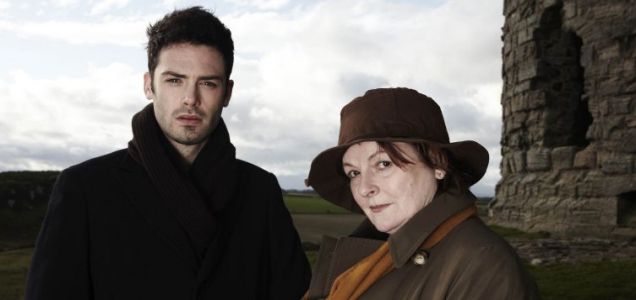
Vera
Cop procedural based on novels of Ann Cleeves. Can’t speak for the novels, but the first episode of the tv version wasn't great. An intriguing set-up yielded the laziest of denouements, based on the 'because he's mad’ motive.
In other episodes, viewers were treated to tired old chestnuts such as that of a trained policeman turning his back on a suspect to rescue a victim in a cellar, having been sent to a remote farmhouse on his own. (The two viewers in the UK who have never seen a cop show may not have guessed what would happen, but they were probably doing something more interesting with their Sunday evenings anyway.) The dialogue included such gems as, “Those who profit from violence aren’t above using it to their own advantage.” Really? Even a be-cardiganed Brenda Blethyn can’t make this a long-stayer, surely?
The final episode had just too many TWNHs to list, straining our credulity to the point of no return right from the pre-credit rescue of the drowning boy, who is the only witness to a brutal murder.... Stop us if you think you've heard this one before. The dialogue was yet again aimed at those unfamiliar with the notion of cop shows, or perhaps both cops and shows:
"He says he's the boy's father." (I paraphrase here)
"He could be lying."
"Why would he lie? Anyway, the DNA test will tell us."
Would two police officers, both in on the interview with the suspect and familiar with DNA swabbing, have this conversation? Presumably the suspect might just also be aware that saying he's the father would mean a paternity test?
Even if we could forgive all of the above and replace the 'gritty' Tyneside setting with, say, Neverland, we can't bring ourselves to forgive Brenda's shouting at everyone every five minutes. If she wants to be Boyd from 'Waking the Dead' she's missed the boat. If real cops yell like tv cops all the time, there must be a high rate of deafness among the ranks.
The final episode had just too many TWNHs to list, straining our credulity to the point of no return right from the pre-credit rescue of the drowning boy, who is the only witness to a brutal murder.... Stop us if you think you've heard this one before. The dialogue was yet again aimed at those unfamiliar with the notion of cop shows, or perhaps both cops and shows:
"He says he's the boy's father." (I paraphrase here)
"He could be lying."
"Why would he lie? Anyway, the DNA test will tell us."
Would two police officers, both in on the interview with the suspect and familiar with DNA swabbing, have this conversation? Presumably the suspect might just also be aware that saying he's the father would mean a paternity test?
Even if we could forgive all of the above and replace the 'gritty' Tyneside setting with, say, Neverland, we can't bring ourselves to forgive Brenda's shouting at everyone every five minutes. If she wants to be Boyd from 'Waking the Dead' she's missed the boat. If real cops yell like tv cops all the time, there must be a high rate of deafness among the ranks.
Labels:
Adaptation,
Brenda Blethyn,
Crime,
Drama,
review,
TV,
UK,
Vera
Subscribe to:
Posts (Atom)